Showing posts with label Music. Show all posts

Thursday, 15 November 2018

Try Out Guitar 360 Method Using a Coupon Code!


{This post may contain affiliate links.}

Ooo!  You have to love when you find a course that both a dad and a daughter can enjoy.  That's what's happened here when we were offered a chance to review the Semester 1 Bundle from Guitar 360 Method - an excellent resource for online, immersive lessons which include music theory.


Deal Alert!

If you've already heard of Guitar 360 Method and have just stopped by looking for a coupon code,  you're in luck! Krisz Simonfalvi, the author and instructor of Guitar 360 Methodhas kindly offered a limited time only coupon code for Training Happy Hearts readers.  Just use the code HOMESCHOOL20 at checkout for 20% off!

What is Guitar 360 Method?


If this is your first time hearing about Guitar 360 Method, let me explain a bit about what it is and how it works.

Guitar 360 Method is a series of online video guitar lessons designed for students who want to gain confidence in their guitar skills, enjoy freedom in when they learn, and exercise creativity in their playing. 

The program aims to help you do more than JUST learn songs.  It teaches how music works, so you can succeed with your aims, whether they be strumming for fun, playing in a band, or writing your own music.  


Guitar 360 Method is best suited for tweens, teens, or adults, and can be excellent for you if you are an absolute beginner that wants to understand the guitar while learning practical music theory.  It can also be ideal for you if you've been playing for a while, but wish to learn more in order to unleash your creativity.  The author and instructor of the program also states that children as young as nine can do well with Guitar 360 Method if they have a strong personal desire and drive to succeed.

The Semester 1 Bundle comes with:


  • the Free 5-week Absolute Beginner Course that takes you through Parts of the Guitar, Left Hand and Right Hand Basics, How to Tune, 4-Finger Warm Up Exercises, Your First Chord, Next chord(s), Basic Strumming, Pickups and Multiplying Chords, Parts of a Song, Practice, etc.
  • Bonus Content Songs carefully instruct you with an Introduction and Verse, Pre-Chorus, Chorus, Bridge, and Practice
  • 13 Weeks of Semester One material takes you from being a beginner to confidently playing in any key anywhere on the neck with dynamics, musical interest, and variety.  Among other things, you'll learn about Chords, Strumming, Music Theory, Scales, and Adding Texture and Variety.  By the time you finish the material, you'll have learned enough to a play rhythm or lead guitar.

When learning with 
Guitar 360 Method, you'll find a Cyclical Pedagogy where every bit of knowledge acquired connects to everything else you are learning, allowing you to build confidence, freedom, and creativity instead of being stuck in the mire of a tedious linear-approach.  

In fact, the instructor and author of the program, 
Krisz Simonfalvi, has succeeded due to his mix of skill and down-to-earth music theory!  He started playing classical guitar at age six, quickly became good at it, but did not enjoy it, because his teacher never taught him how to understand the guitar.  So, Krisz quit playing after six years.

Then, in Krisz's teens, he picked up an electric guitar and found his music theory teacher's voice ringing in his ears. He realized how easy it is to understand the guitar with practical, down-to-earth music theory and went on to tour with bands, record in studios, produce music, and teach lessons to pros and newbie alike.

In his career, Krisz has:

  • taught over 200 private students - from beginners to professionals
  • instructed in guitar, bass, music theory, songwriting, stage performance, music production, arranging, and engineering
  • recorded 20+ projects for a wide range of international artists on four continents
  • and, of course, launched Guitar 360 Method.

That means Guitar 360 Method, though fairly new (launched in 2017), comes with a long history of success.

It also comes with ease of use.


We found log-in super simple, and, pulling up content easy.  There was no wasted time as we navigated the course through targeted, bite-sized lesson videos.

Lessons vary, but, typically, each one contains one or more of these types of videos:

  • Goal, where you find out what you'll be learning
  • Instruction, where the actual teaching takes place
  • Ear, where you practice listening to differences between chords to help you play by ear
  • Practice, where you follow instructions and see fingering and chords
  • Quiz, where you check up on what you've been learning by taking a multiple choice test with instant feedback

There are also some downloadable files to help you retain your learning.

The course is set up so you can take things at your own pace, reviewing prior material or even jumping ahead as you wish.


Guitar 360 Method truly is solidly designed and taught.

A Happy Girl


My 11 year old was the person in our home who most wanted to try 
Guitar 360 Method, since she her daddy bought her a guitar a while back that she has been wanting to learn to play.

She was excited to start 
Guitar 360 Method, and, thanks to Krisz's kind and clear demeanor, was not chagrined by the fact that her fingers are still a bit small and tender and her fingers lack practiced dexterity.  In fact, she is content going slowly with Guitar 360 Method and has this to say:


I have wanted to play guitar for a couple of years. 
On my ninth birthday, my dad got me a guitar and said he'd teach me. That did not go very well.  So, I was excited when I saw we could do the Guitar 360 Method.
I  have only used the beginner lessons, because I am very slow, and the teacher says, "Take it at your own pace."  So, I took him seriously. 
So far, it is going better than lessons with my dad. 
I like how the teacher is up front.  For example, when he teaches how to use the pick, he showed me how to use it a certain way and, then was like, "and right off the bat, my problem with this series... There are people who use the pick this way (the wrong way), and they are legends, but we're going to try it like this."  I like how he says that there is not one way to do things.  Other people are like, "This is the only way to do it, and you have to do it this way!" (Not my dad or Krisz, but many teachers.) 
I also like that the videos are short.  That makes it easier to find videos with a certain skill.  You don't have to go through a long video, but can see it in a short video that is labeled. 
I also like that the teacher seems fairly happy. He is easy to listen to. 
My mom told me Guitar 360 Method is not a subscription that runs out.  That's good, so I can actually finish it. I am slow and there is no pressure.  I like this and would recommend it to kids like me, who are kind of beginners, and people who have started playing but want a refresher and to learn new things.

A Pleased Dad


My husband, who has played guitar on and off for years and even played in a paid band for while, has also been viewing the course.  He says:
As an experienced guitar player, I wasn’t sure if I would get anything out of the Guitar 360 Method program. Much to my surprise, I actually learned some new things. 
For example, I had never heard of Solfege prior to starting the program. Another example is the shortcuts to finding notes. Although I have been playing for many years, I still struggle to find all of the notes on the guitar without having to think about it. This is a common issue with many guitar players. However, Krisz Simonfalvi gives several easy-to-remember tips on how to quickly find notes on the guitar. I found this section to be extremely helpful.
Not only did the program teach me new things, but it also helped re-establish ideas and techniques that I am already familiar with. He spends time going into music theory, teaching the student how to connect minor and major scales, analyzing chord shapes and even string bending. And he also has a check on learning by giving quizzes periodically throughout the program. 
Overall, I think that it’s a good program because it helps the beginner go from the basics of the guitar to music theory which will help students take their playing to the next level. Further, it helps the experienced player learn a few new things and reinforce prior knowledge in a unique and interesting way. I would definitely recommend it for a self-taught, non-classically trained experienced player like myself to learn more.

My husband is also a huge Youtube fan and has viewed countless Youtube videos to pick up different guitar skills through the years.  When I asked him what he thinks about Guitar 360 Method in comparison to most free Youtube videos, he said this program definitely gives a bigger picture and is more methodical.  On Youtube, you have some guy that just quick says, "Here, I am going to show you how to do this," and does just that. With Guitar 360 Method, you can definitely see the whole method.  The program can take a beginner from where they are to where they want to be and can be a resource for more experienced players, too.


No Need to Rush to Finish


One thing I dislike about many online programs is the rush to finish them before a subscription runs out, or, worse, the fact that life sometimes gets in the way of studies and, then, when you return to pick up where you left off, your subscription has ended and you cannot continue without paying again.  With 
Guitar 360 Method 
this will not happen!

Once you get 
Guitar 360 Method its yours to keep, and I love that! For, like many homeschoolers, my family struggles with actually getting the "home" in homeschool. Between work trips for my husband, homeschool community commitments, outside classes and service opportunities, my own work needs, and more, our family often finds that we're short on time at home to enjoy things like learning and playing music.  Add to that that one of our computers recently died, and, once we have attended to priorities of eating, sleeping, chores, and basic lessons, there just are not enough screens to go around for everyone to dive in concurrently with what they wish. For us, that means that subscription-based programs, even when liked, don't always get completed and often become more stress than enjoyment lately.

Because  
Guitar 360 Method is not a subscription, though, this has not happened. My daughter has been able to begin to self-pace through the program in small pockets of time while my husband has referenced it around work and family.  My boys - who both want to give it a go - know they can when time allows in another season, and I can, too! You see, I have always wanted to play an instrument, and after seeing parts of Guitar 360 Method in play for my daughter and husband, am confident that when I some of my current commitments and life concerns wind down, I can finally begin learning.

Yes, I just LOVE that 
Guitar 360 Method does not come as a subscription, but is our family's to keep!

Learn More


Remember, if you want a FREE taste of Krisz's teaching style and the high-quality of his lesson videos, you can use his Free Course for Beginners.  Then, if you like what you see (like we do!), move on to the Semester 1 Bundle using the coupon code HOMESCHOOL20 at checkout, which, for a limited time, will offer you 20% off.

If guitar isn't your thing, keep an eye out at 
Guitar 360 Method  for the release of upcoming Keys 350 (piano) Method and Drums 360 Method in the near future.



Find Guitar 360 Method on social media:

Find all the reviews!

Read how 50 Review Crew families have been learning how to play guitar online using Guitar 360 Method with tweens, teens, adults, and even younger children.


Crew Disclaimer

Wednesday, 11 April 2018

Music Appreciation Made Easy - and Thorough! {A Memoria Press Review}


Picture children listening intently to music, giggling as they act out a winter scene in response to what they hearing.  This is exactly what happened in my living room during Lesson 2 of
Music Appreciation I by Memoria Press, a curriculum we've been happy to review. 


What Is Memoria Press?


Memoria Press is a family-run publishing company that produces simple, effective, easy-to-use Classical Christian curriculum for all ages.  Since Memoria Press was founded by Cheryl Lowe in 1994, it has exploded with popularity among home educators and private schools and continues to develop new materials - like Music Appreciation I - which focus students on the rich tradition of classical education. 

Materials that
Memoria Press has developed in the classical style, my family has found, need not be pigeon-holed just for classical educators, however.  My family leans toward a more eclectic, relaxed style, and has found Memoria Press materials can dovetail with - and even direct - our studies beautifully at times.

What is Music Appreciation I?


Music Appreciation I is an easy, yet thorough, introduction to music appreciation that is targeted to grade 3-6, but can be used by older children and adults, too.  The curriculum comes as a 137-page softcover book and 2-CD set that takes you -mostly chronologically - through a series of pieces from the canon of Western classical music, offering historical context and introducing musical concepts including:


  • forms
  • melody
  • theme
  • rhythm
  • harmony
  • notes
  • syncopation
  • motif
  • meter
  • measure


and more.  In doing so, the curriculum guides you towards a fuller undertanding of the inner workings of select pieces of classical music.  It also offers an introduction to (or review of) specific composers and musical time periods, giving you an overview of the evolution of Western music.

To use the curriculum, you need no prior musical knowledge of musical theory since concepts are introduced little by little and you need not know how to read music nor play an instrument either, since all the musical scores contained in the book are available as audio files.  (If, however, you do know how to play an instrument, you an use the scores in the book to play examples instead of listening to them on CD!)

Each lesson in the book is typically ordered in the same basic format:


  • Listen: where you listen to select pieces offered as free links from Youtube or Spotify on the Memoria Press website and/or listen to portions of these pieces on the CD's that come with the curriculum.
  • A Little History: where you can read background connected to specific musical pieces, including details about about the lives of composers/musicians, the time period the piece was composed during, why the piece may have been composed, or what was going on in history that played a significant role in the piece.

  • Musical Concept: where you listen to specific tracks on the CD's (or play selections from the score included in the text), get introduced to vocabulary and concepts, and take baby steps in analyzing music.
  • About the Piece: where you learn even more details about a piece.
  • Music History: where you learn a bit about the period the piece was composed during.
  • Facts to Remember: where you find a quick numbered list to review what was taught in the lesson.
  • Listen Again:  where you listen to the music again with specific prompts of what to listen for.

Included in the back of the book are review tests (with answer keys) that can be completed after every four lessons.

How Did We Use Music Appreciation I?

 Music Appreciation I could not have come at a more opportune time for me as life circumstances have recently demanded that I spend fewer hours planning and preparing learning experiences for my children, while my desire to offer them a rich and deep bounty of truth and beauty has remained strong.

On the music front, the disparity between my time budget and the my ability to offer forays in quality music appreciation was becoming more and more evident before I was introduced to
Music Appreciation I.  For, between past family studies and an Art-Music-Poetry (AMP) club I have been leading for my children and some or our friends for several years, I had already offered all of the rudimentary knowledge of music I possess and had also cycled through a wide variety of favored classical music CD's and picture books.  Thus, in order to offer new or deeper music appreciation material to my children, I was finding myself having to invest more and more time, which, as I already said, just has not been there for me.

Thus, I was thrilled with the opportunity to begin
Music Appreciation I with my children.  It has made music appreciation so easy!  I simply get my laptop and the book and go with it!

We listen to key musical pieces using handy links on the Memoria Press website.  Then, we read the history narrative in the book - which we have found is helping us review past learning from our AMP club.   Then, we learn and chat about musical concepts listening to CD tracks that key us right into examples of the concepts.  We read a bit more, listen a bit more, sometimes dance or pretend to conduct, and, at other times, go off on tangents, making connections with the music and history, prior learning, and our own lives.
  And, we do all this without me having to curry about collecting resources, pre-learning concepts, etc. 


Music Appreciation I is truly open-and-go, and, thus, allows me to spend time learning alongside my children, connecting with them instead of planning and prepping.  I like that!  My children do, too.

My seven year old said:


I like all the different styles of learning in one - that you can read or listen to reading, hear songs, look at the music notes in the book all together.

My ten year old said: 

I liked this music appreciation curriculum, because I like how it comes with the CD and the books.  The CD's have sections of the songs they want you to hear.  I like that because it helps us focus.  For example, at one point, we were listening to the Four Seasons and could hear the instruments going back and forth almost like talking to each other.  It was really fun!  We were dancing to it.  Then, we heard the whole song with the links we got. 


I am learning new stuff about how music is put together and reviewing about composer and periods.

I also like how they took a simple song in the first lesson - Twinkle, Twinkle Little Star- and changed it into a lesson to find the beats and form.

I want to keep on using this.


When it was time to write this review, my twelve year old was not up for commenting, however, I can recall some of his comments over the course of time we have been using  Music Appreciation I so far:

At first, he looked at the book and said, "It is a boring old text book," or something akin to that, because he has an aversion to anything that appears textbook-y or workbook-y, which, the Music Appreciation book admittedly does.

However, once we began using the book, he found himself moving to music, and laughing, sometimes with friends, when we opted to share a lesson or two with our AMP friends. I also witnessed him catching onto concepts quickly.  The guided listening helped him - and all of us really - go deeper into the way music is put together, appreciating nuances and concepts more.

My oldest is also my voracious reader, so as we read narratives in the book aloud, he readily connected what we were reading to facts he had heard and read before.  This proved to me that the book makes as good an introduction as it does a review. 

All of my children and I have found ourselves learning concepts and coming to a deeper understanding of music even though we are not even a quarter of the way into
Music Appreciation I.  Thus, I do not hesitate it recommending this resource if you and yours would also like to go deeper into music appreciation but do not have a lot of time to invest.  With Music Appreciation I  you do not need to know a lot about music theory, nor do you need to dedicate time to prep.  Instead, uou can just get right into listening, reading, and learning - deepening your appreciation for the Western canon of classical music. 


Truly, the only complaints we had about the materials were my oldest son's initial aversion to the "schooly" look of the book (which I already mentioned and which he got over); my daughter's and my surprise that the CD's do not contain whole pieces of music, but rather key snippets which pertain to concepts taught (which we quickly realized was quite handy since having just select portions of music meant there was no fussing about trying to find the exact part of a piece to listen to as an example of a specific musical concept; plus, we could listen to whole pieces on the handy links offered for free to all on Memoria Press when we wanted); and my own confusion when I popped the CD's into my laptop and realized that the way my laptop numbered the tracks and the way they are numbered in the book were different (which was easy enough to work around).  These minor "issues" were far outweighed by the ease, expertise, and entertaining forays into music that Music Appreciation I offers!  Our family will continue to deepen our musical knowledge and appreciation using this Memoria Press resource. 


Learn More

Samples of
Music Appreciation I (which sells for $23.90) are available:


I typically include personal photos in my reviews and am sorry I could not this time due to a computer-camera glitch I was having as I wrote this review.  However, I know some of the other
80 Homeschool Review Crew families that chose to try out Music Appreciation I or one of the following Memoria Press curricula took and shared personal photos, so do take a peak at their reviews if you like to see snapshots of book pages and families using materials!


.


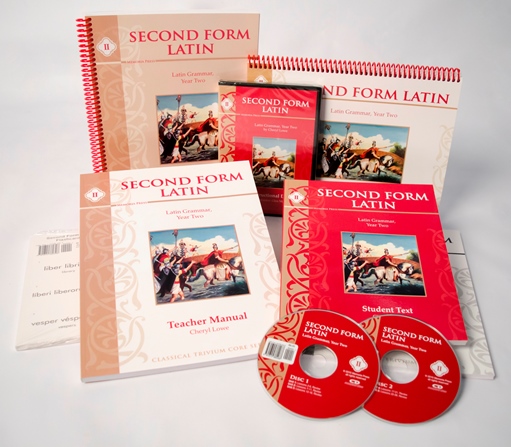
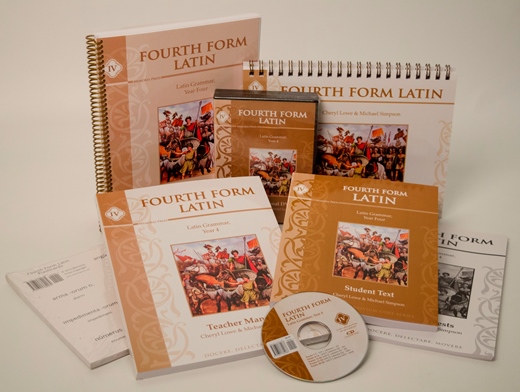
Spelling, Music Appreciation & Latin {Memoria Press Reviews}

Visit Memoria Press on social media:


You might also like some of our other
Memoria Press reviews:


http://traininghappyhearts.blogspot.com/2015/04/learn-cursive-early-easy-way-review.html


http://traininghappyhearts.blogspot.com/2016/05/memoria-greek-myths.html

http://traininghappyhearts.blogspot.com/2017/04/MemoriaPressAmericanHistory.html


Crew Disclaimer

Saturday, 27 January 2018

Plan a St. Brigid and St. Verdiana Art, Music, and a Poet-Tea


February first is the Memorial of Saint Brigid of Ireland and also that of Saint Verdiana (although some calendars have Saint Verdiana's day listed as February 16th.)  It is also a day that our AMP It Up club is scheduled to meet.  Thus, I am planning another saint-based Poet-Tea, filled with faith, food, friendship, art, music, and poetry.

If you'd like to include saint-centered snacks and arts immersion on the St. Brigid's and St. Verdiana's feast day, I thought I'd share our Poet-Tea plans.

A St. Brigid and St. Verdiana Poet-Tea Setting and Menu
{Disclosure: Some of the links that follow are affiliate ones.  Should you click through them and make any purchase, we may receive compensation at no extra cost to you.}

Our poet-tea table will be decorated with:


  • a white tablecloth (for the purity of the saint' love for God) layered with a blue fabric with golden "stars" on it (since St. Brigid's mantle is sometimes depicted as blue with stars).
  • green candle (to remind us that we are in Ordinary Time) and a white candle (also to remind us of the purity of the saints' love for God).
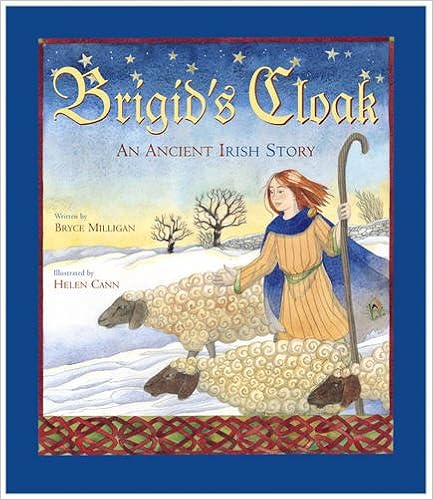
  • several books depicting Saint Brigid and Saint Verdiana including:
http://amzn.to/2kIsCk7 
Saint Bridget and the Fox and Saint Verdiana and the Snakes in Amazing Saints & their Awesome Animals

  •  a St. Brigid cross (if I have time to fashion one) and some dry beans to remind us of how St. Verdiana, with her charitable heart,  gave away all her beans to the poor).
  • a globe, so we can locate Ireland (for St. Brigid) and Italy (for St. Verdiana).
  • perhaps some snake and cow figurines (since snakes play into St. Verdiana's stories and cows into St. Brigid's)

The food and drink we will serve s still being decided, but will likely include some of the following:
  • bread, water, and herbs (because St. Verdiana's diet consisted of eating bread and water once a day, and, sometimes, eating herbs or vegetables.)
  • beans (because Verdiana gave beans to the poor.)
  • apples (because apples play into one of the tales of St. Brigid's miracles and charity.)
  • coconut milk (because there are a number of tales and traditions related to St. Brigid and milk, but my children are cow-milk-free kids and one of our guests has both nut and soy allergies, so coconut milk is our only milk alternative)
  • oat bread (adapted from traditional St. Brigid's oat cakes)
  • blueberry jam (because it is traditional to eat on St. Brigid's day.)
  • an "Italian Flag" fruit plate and an "Irish Flag" vegetable plate (because St. Verdiana was Italian and St. Brigid was Irish.)

Whatever the fare ends up being, I know, we'll pray pray grace, some spontaneous prayers, and a Traditional Catholic Prayer to Saint Brigid before digging into it and chatting more about the lives of Saint Brigid and Saint Verdiana, who were both known for their charity.


Poetry

We will revisit the poem The Giveaway, a long-time St. Brigid Day favorite of mine using a pdf from Clondalkin Village Parish.  Then, after reading about Saint Verdiana, I will ask the children to try their hand at writing a poem, inspired by The Giveaway, about Verdiana.

Music

Bridging from poetry to music, we will take a peak at the lyrics of the Hymn to Saint Brigid as we listen to it sung on a Youtube video:


We will also sing along to We Sing a Song to Saint Brigid.


Art


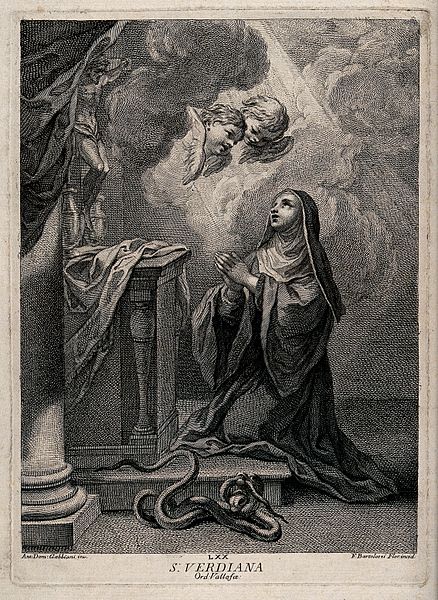
This file comes from Wellcome Images, a website operated by Wellcome Trust, a global charitable foundation based in the United Kingdom. Refer to Wellcome blog post (archive).

Finally, for art, we will notice how the illustrations in 
Saint Brigid and the Cows use hatching and how an engraving of St. Verdiana by Bartolozzi uses stippling, much like his other artwork did as demonstrated in the detail below:


Then, we'll explore hatching and stippling using simple exercises like this one:


Or, perhaps, by creating our own simple line drawings of items and creatures that remind us of Saint Brigid's or Saint Verdiana's story, and, then, adding value to our drawings through hatching or stippling.


More


Find loads of ideas, resources, and links for lessons inspired by Saint. Brigid and Verdiana as well as plans for a luncheon.


Enjoy some ideas for simple stories and notebooking -including a link to a free online story, take a peak at plans for a simple Saint Brigid Feast day for younger children, or flashback to how we celebrated one year when my children were wee ones.


Browse through Poet-Tea plans and photos for other liturgical celebrations.

Saint Brigid, pray for us.  Saint Verdiana, pray for us.